
At KeraLink International, we know that preventing blindness takes more than access alone. It requires clinicians who are trained, equipped, and confident in high-stakes situations. That is why training and capacity building remain such an important part of our work. That is where our work becomes critical.
Through the Infective Keratitis Workshops we support each year, KeraLink is helping close real-world skill gaps for ophthalmologists, treating one of the leading causes of corneal blindness. This work is carried out in close partnership with the expert trainers at Dr. Shroff’s Charity Eye Hospital in Delhi, India, whose clinical leadership is central to the program’s success. Since 2024, these workshops have trained more than 140 ophthalmologists. Each year, we have seen firsthand how important this type of hands-on learning can be for providers working in busy and often resource-constrained settings.
Keratitis is a sight threatening corneal infection caused by bacteria, viruses, fungi, or protozoa, requiring prompt diagnosis and treatment to prevent vision loss, can progress quickly and lead to severe vision loss if it is not diagnosed and treated early. For many clinicians, these cases can be complex. Distinguishing between bacterial and fungal keratitis, collecting proper microbiology samples, deciding on treatment pathways, and knowing when surgery may be needed all require both knowledge and experience.
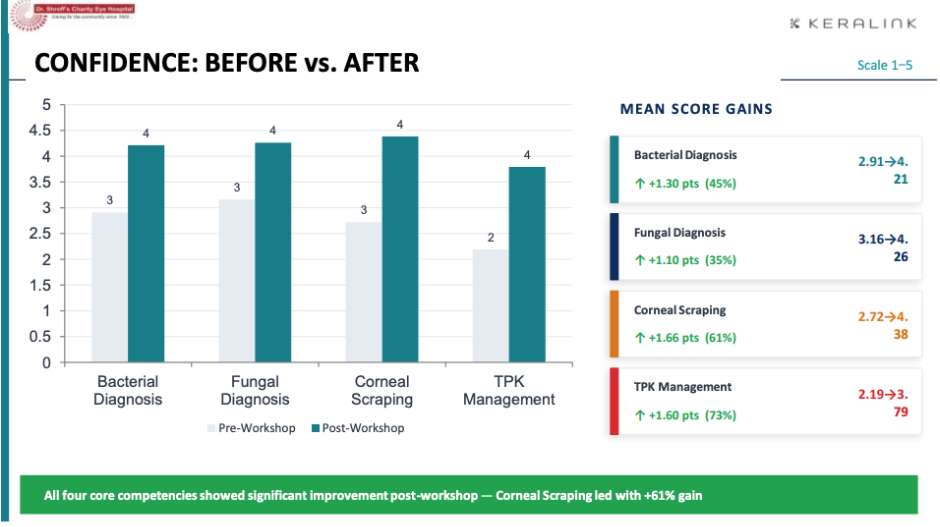
Recent workshop feedback showed that participants came into the training with meaningful gaps in confidence across several core competencies, especially in corneal scraping and therapeutic penetrating keratoplasty management. After the workshop, confidence improved across every key training area, with some of the strongest gains seen in practical, high-stakes skills. Participants also rated the workshop very highly overall, with the wet lab portion—where clinicians practice surgical and diagnostic techniques on tissue in a controlled, supervised setting—standing out as one of the most valuable parts of the experience.
That feedback matters because it reinforces something we have long believed: practical training drives stronger care. While lectures help build understanding, hands-on experience helps providers apply those lessons in real clinical settings. Many workshop participants had little to no previous wet lab exposure, which makes the opportunity to practice techniques in a guided environment even more valuable.
The impact extends far beyond the workshop itself. Each ophthalmologist returns to their hospital, clinic, or institution with stronger skills and greater confidence, helping improve diagnosis, treatment decisions, and patient care in their own communities. In that way, every provider trained becomes a multiplier of impact.
For KeraLink, this work is about building stronger systems for the future. By investing in training, we are helping equip providers with the tools they need to prevent avoidable blindness and improve outcomes for patients facing serious corneal disease.
More than 140 ophthalmologists trained since 2024 is an important milestone but more importantly, it signals a growing network of clinicians better prepared to protect sight in the places where those skills are needed most.
That is the power of capacity building. And that is why this work matters.