
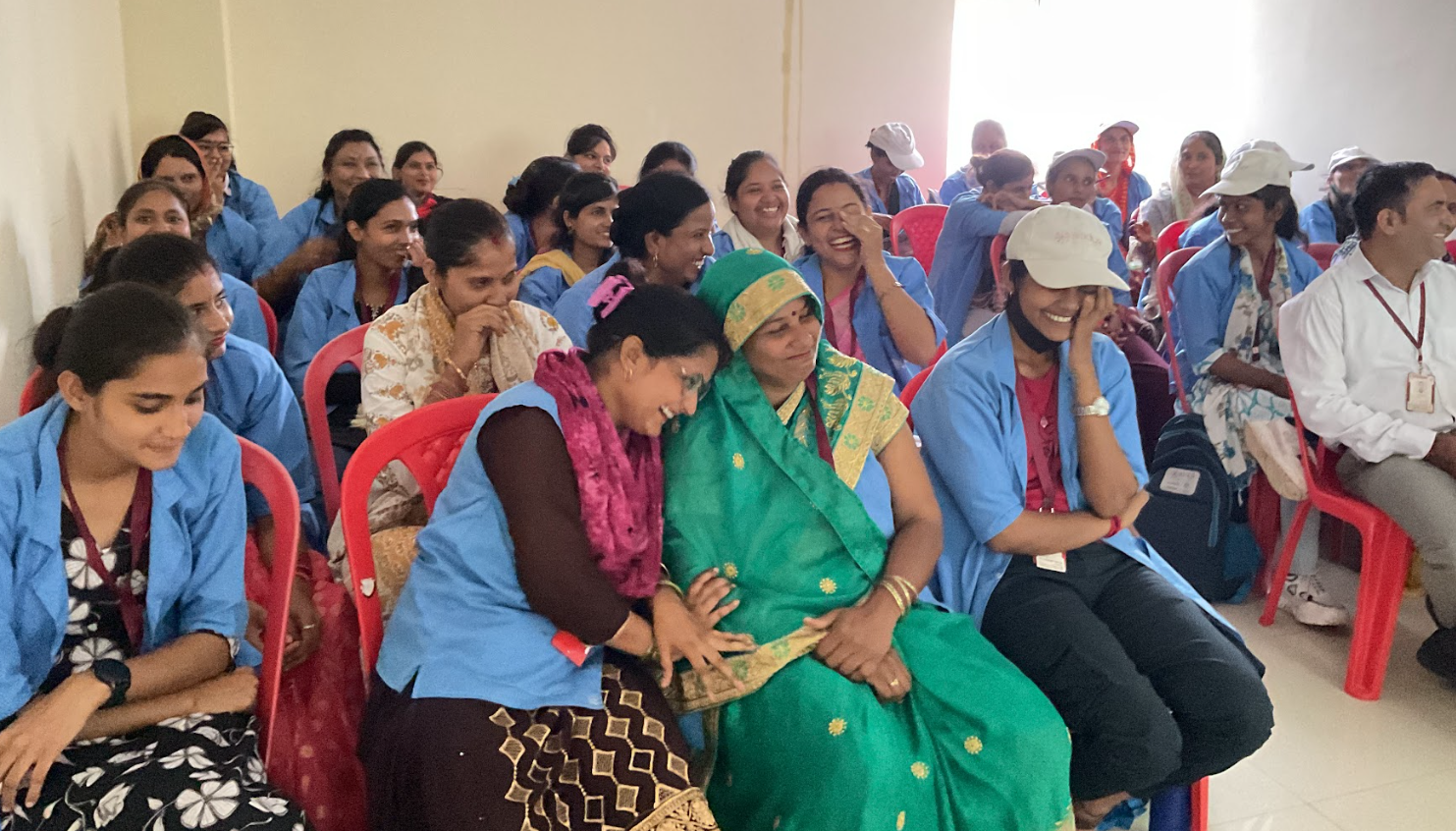
For KeraLink, our mission of preventing avoidable blindness isn’t only a clinical challenge, it’s a human one. It takes clear communication, confident leadership, and strong systems to reach the people who need care most. That’s why a new soft skills training sponsored by KeraLink, now underway in Vrindavan and Saharanpur, Uttar Pradesh, marks a major milestone: a more holistic approach to building the capacity of vision screeners and program leaders alike.
This first-of-its-kind training is administered by Dr. Shroff’s Charity Eye Hospital (SCEH) and facilitated by renowned trainer Mr. Sobins Kuriakose, with support from KeraLink International, who enhances and expands the program in these two regions.
The Aadya program, co-founded by Combat Blindness International and SCEH, is a pioneering model for women-led, community-based vision screening. In Vrindavan and Saharanpur, the program is growing through KeraLink’s partnership—bringing not only additional corneal health training, but also this transformative new investment in people.
At the heart of the training is Mr. Sobins Kuriakose, a dynamic expert with over 20 years of experience in public administration, NGO management, skill development, and leadership training. A graduate of the Tata Institute of Social Sciences, Mr. Kuriakose has trained professionals across India—including at IIMs, TISS, and The World Bank—on topics ranging from governance and impact evaluation to professional growth and image management.
Rakhi Nathawat, Program Director and Community Outreach for SCEH meets with Aadya screeners and coordinators alongside Mr. Sobins Kuriakose.
What sets Mr. Kuriakose apart is not just his expertise—but his approach. His sessions are participatory, practical, and tailored to his audience. In this training, he helps both vision screeners and program coordination staff strengthen core competencies: public speaking, time and self-management, stakeholder communication, and personal branding. These may be considered “soft” skills—but they are foundational to success.
Mr. Sobins offered, “Watching these young girls open up with confidence and share their thoughts after the initial ice-breaker was truly inspiring. It was heartening to see how quickly they connected with each other and the topic. Moments like these remind us why safe, supportive spaces matter.”
For screeners, many of whom are young women navigating rural health outreach, this training affirms their value and builds confidence. Their work demands not only technical skills but also emotional intelligence, professionalism, and presence—all of which are cultivated here.
For program managers and support teams, soft skills are equally essential. They’re responsible for oversight, logistics, mentorship, data management, and partnership communication. The ability to lead clearly and effectively—to coach others, solve problems, and represent the program—can make or break the success of a growing initiative.
This training reflects a holistic approach to capacity building—not just teaching what to do, but strengthening how to do it. It empowers participants to grow as professionals, as leaders, and as ambassadors for their communities.
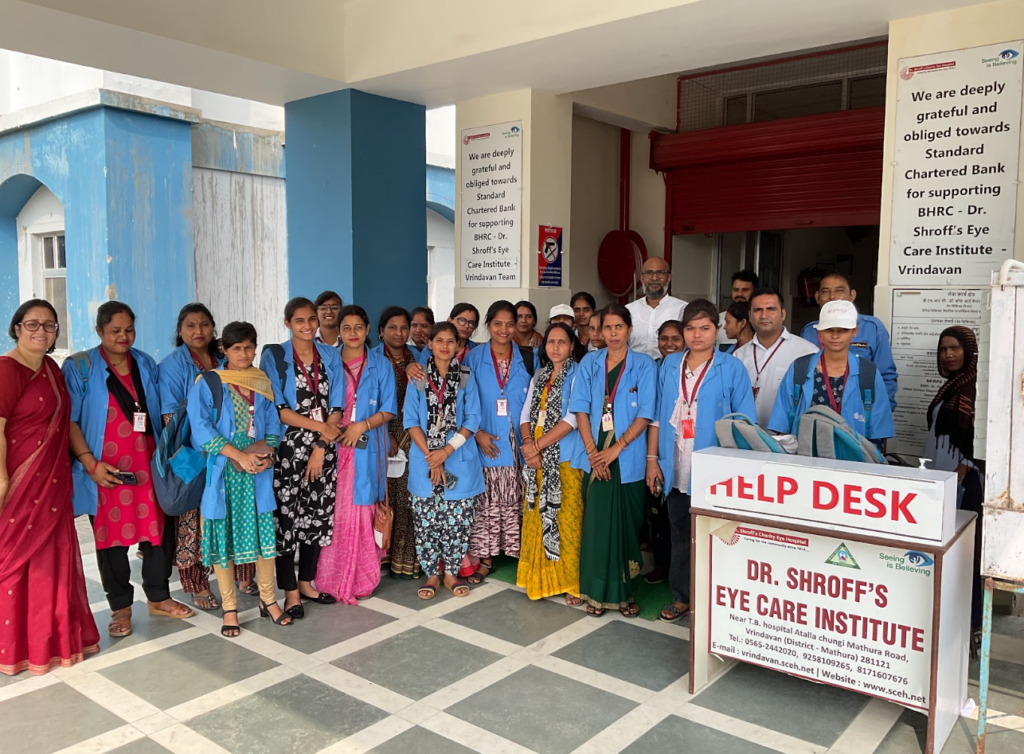
One Aadya screener said, “My highlight of the day was meeting a 44-year-old Aadya screener who was married at 11, became a mother of 4, and bravely restarted her education at 22. Since then, there’s been no looking back. Her journey is a testament to resilience, hope, and the power of second chances.”
And this is just the beginning. A POSH (Prevention of Sexual Harassment) training will also be provided soon, further supporting the safety and dignity of this women-led workforce. We look forward to sharing more in the coming weeks.
While this pilot effort is focused on two locations, it points to a larger truth: lasting change requires investing in people. KeraLink and Dr. Shroff’s Charity Eye Hospital are proud to support this new dimension of professional development in corneal health care. As the program grows, we’ll continue to center and strengthen the people who power it—because true transformation doesn’t start in the lab or the boardroom. It starts with the people on the ground.